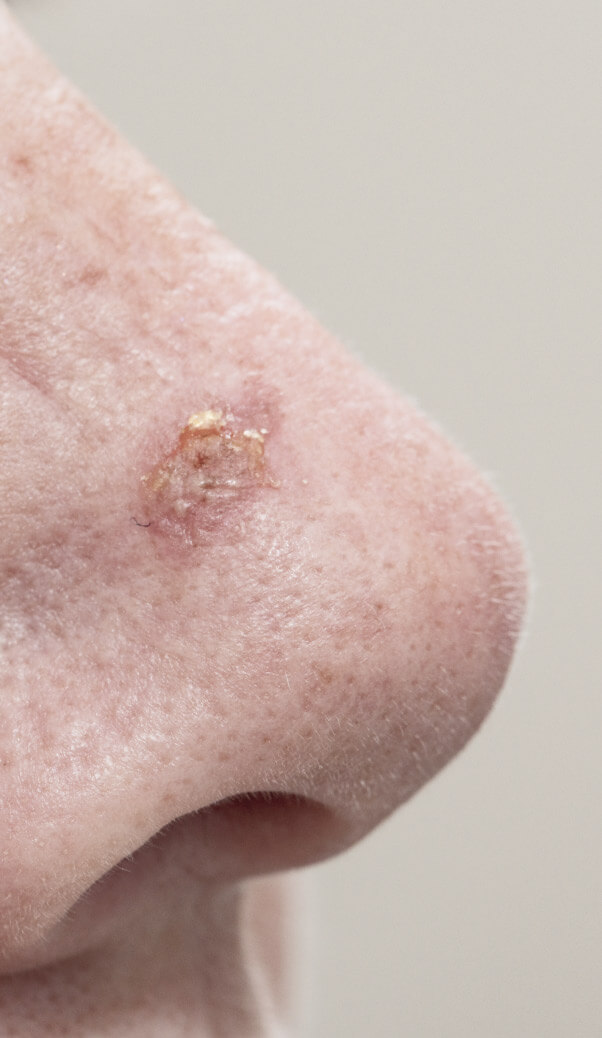
What is AK?
What does Actinic Keratosis look like?
AK can present as a single lesion or a small number of isolated lesions. They may vary in shape and colour. They can look like small blemishes, scabs or spots that may appear gradually. They are dry and rough most of the time and often red or brown in colour. At the more advanced stage, the lesions can become ulcerated and swollen, and begin to bleed or weep.1-4
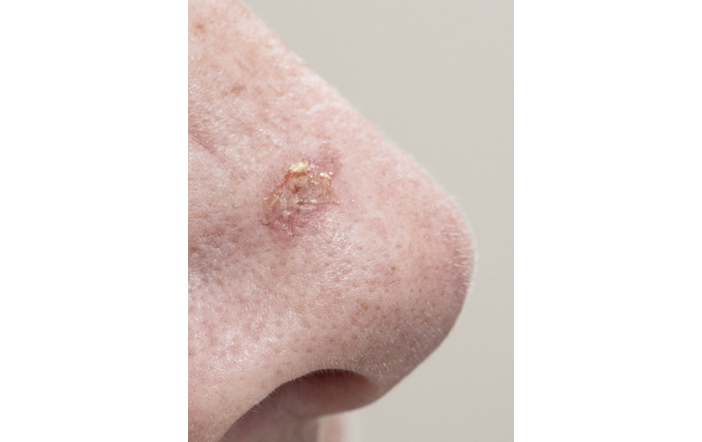
Actinic keratosis on the nose
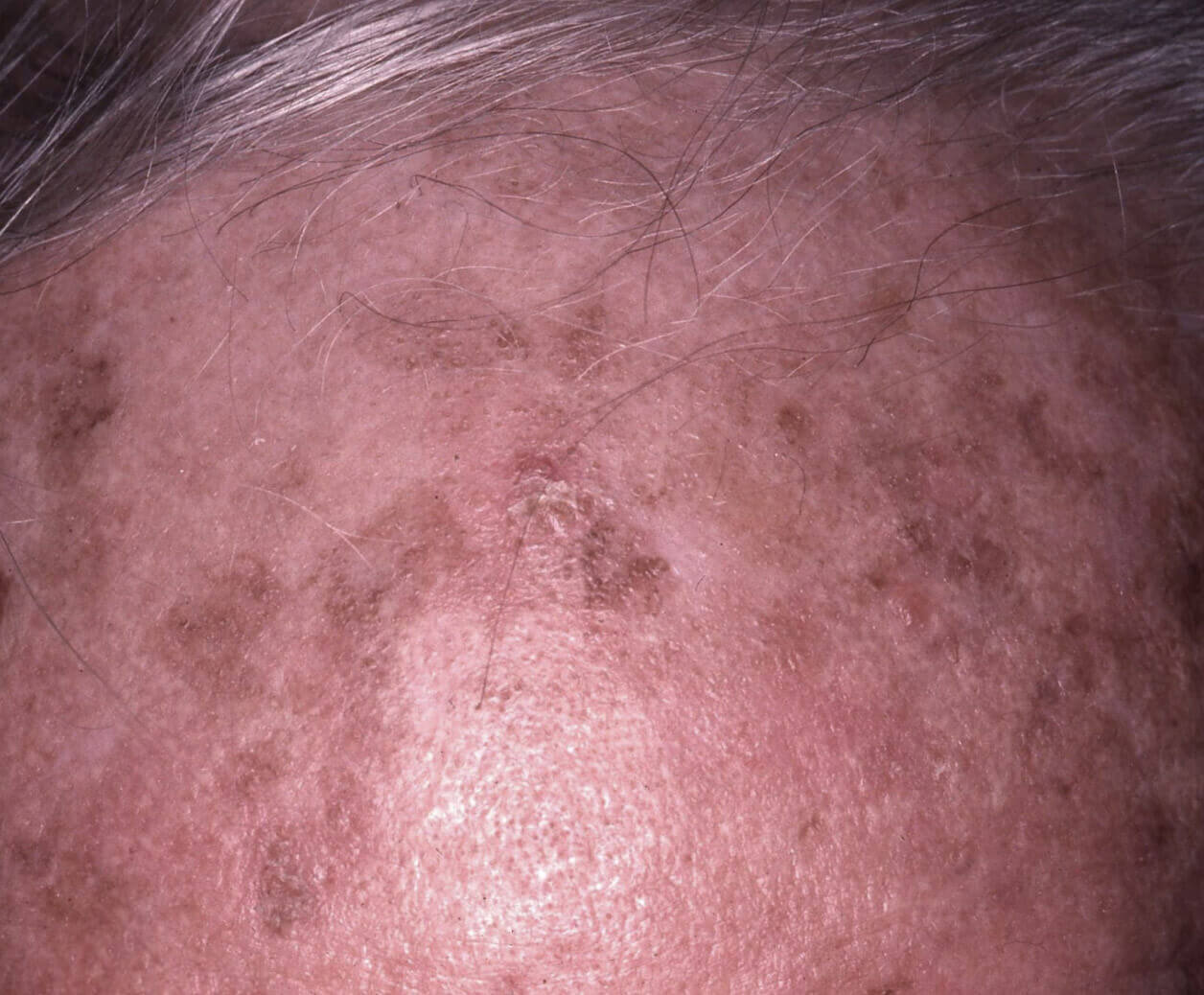
Multiple AK lesions forming what is called 'field cancerisation' on the scalp
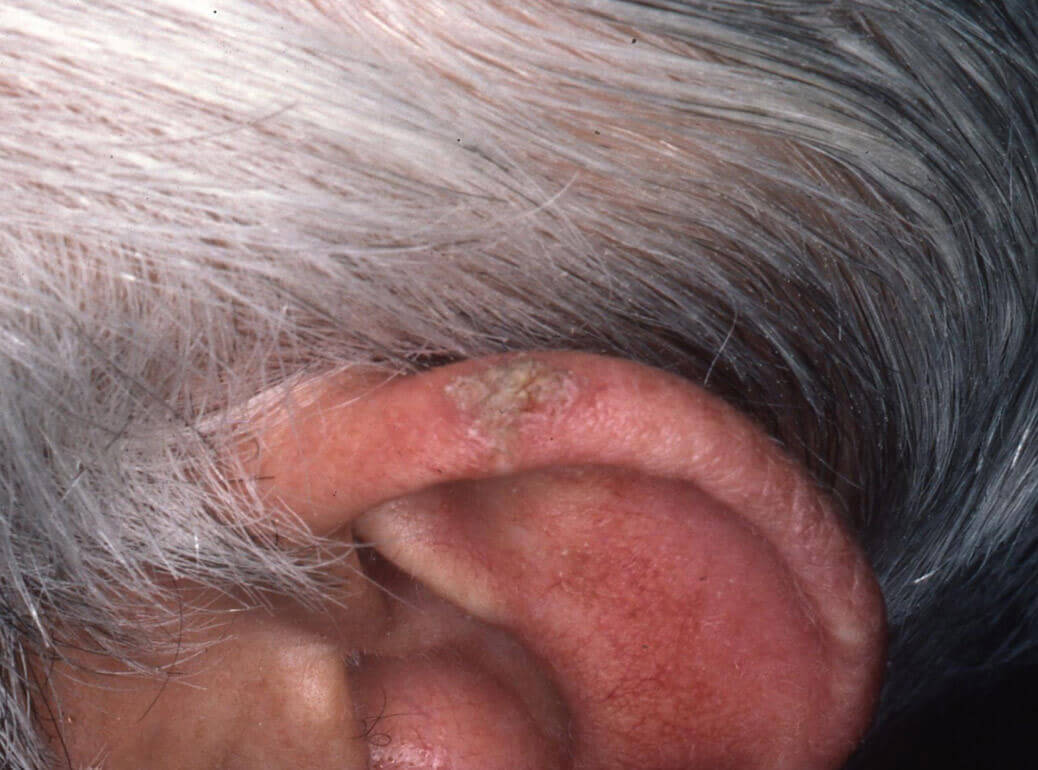
Actinic keratosis on the left ear
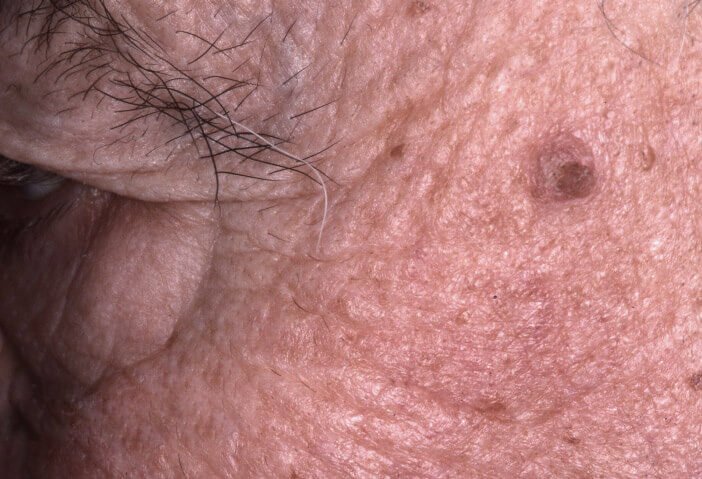
Actinic keratosis on the temple
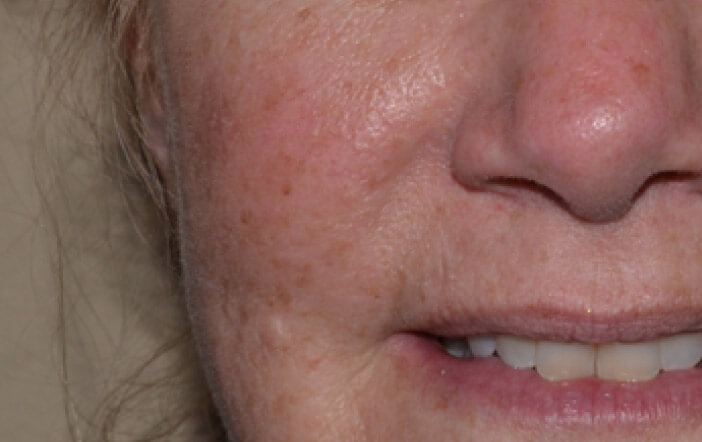
The lesions may be quite discrete: see here on the upper and lower cheek
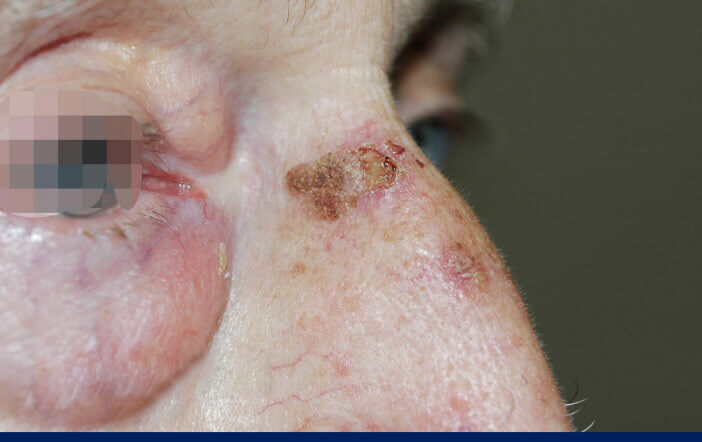
Ulcerating lesion
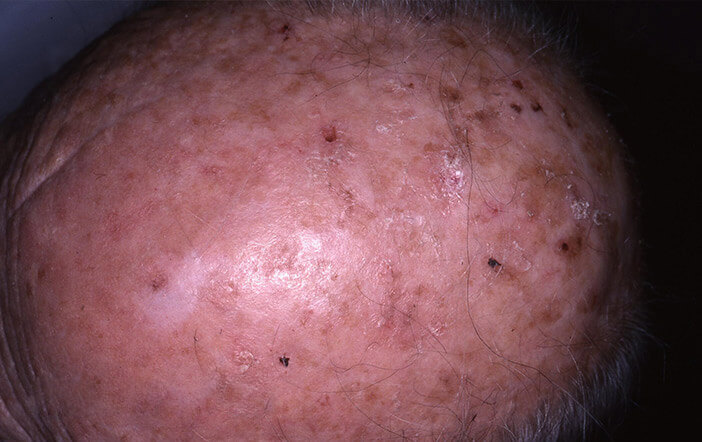
Field cancerisation at the crown of the head
Is the number of visible AK lesions important? Yes!
There are many reasons why the number of visible lesions is important:
- The presence of multiple AKs indicates that there has been significant ultraviolet (UV) light exposure to that area of the skin.1
- The presence of multiple AKs is an indicator that, in this area of the skin, not only are there multiple visible precancerous lesions, but it is also likely that there are multiple subclinical (eg: non-visible, non-palpable) AK lesions present as well. This area of sun damage is called “field cancerisation”.4,6,7
- The risk of developing cancerous lesions (SCCs that can spread) increases as the number of AK lesions increases. 5,6
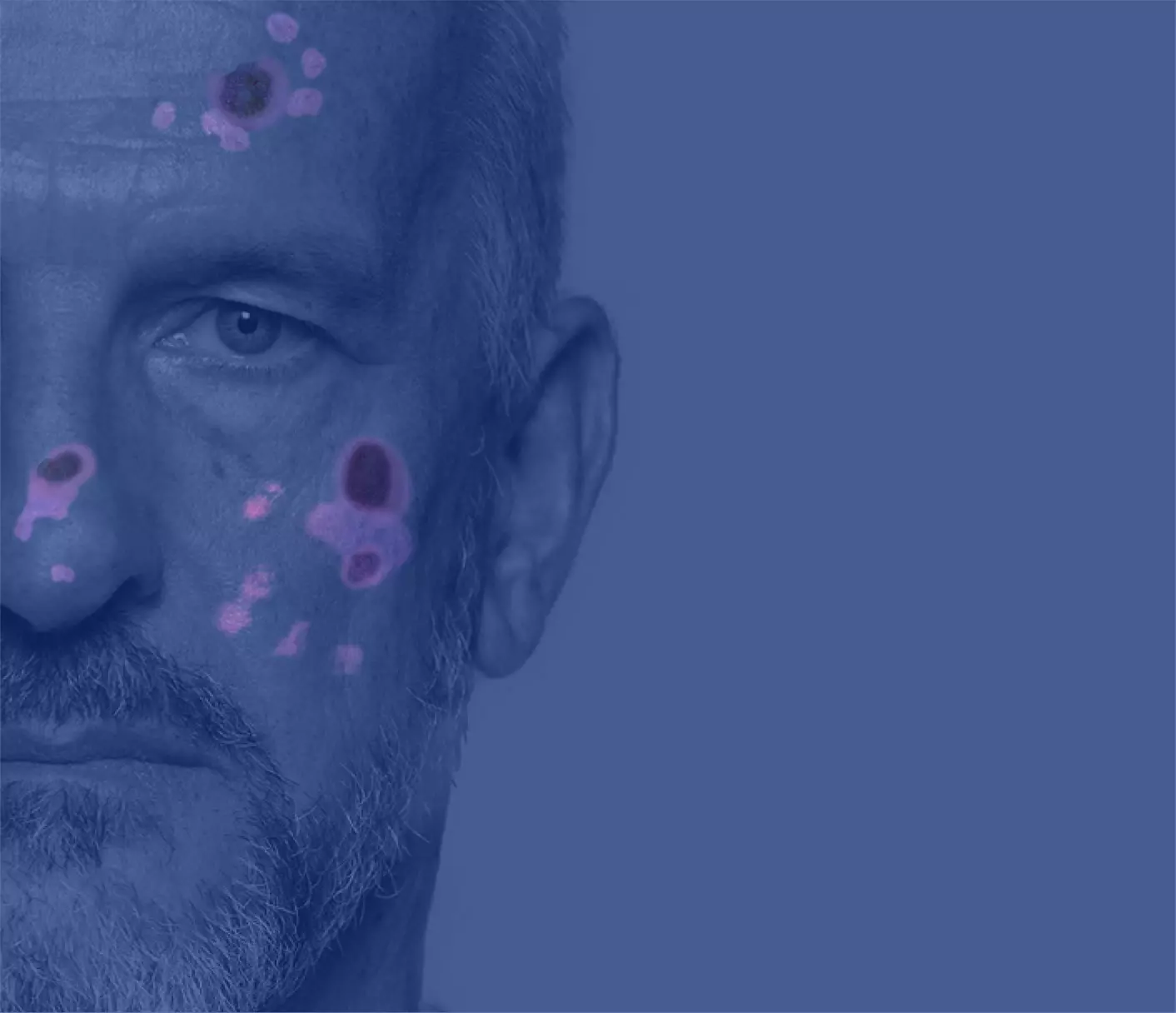
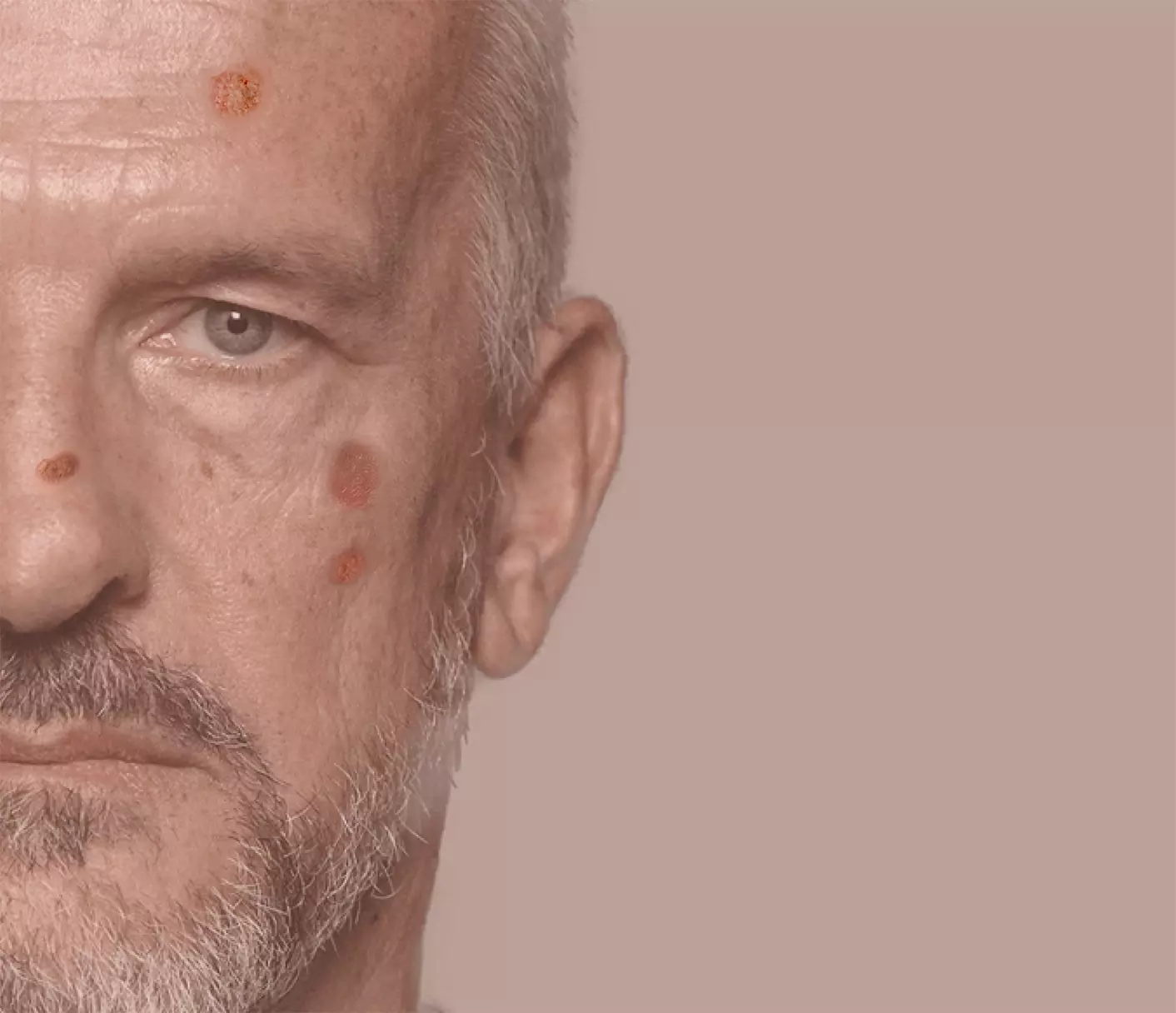
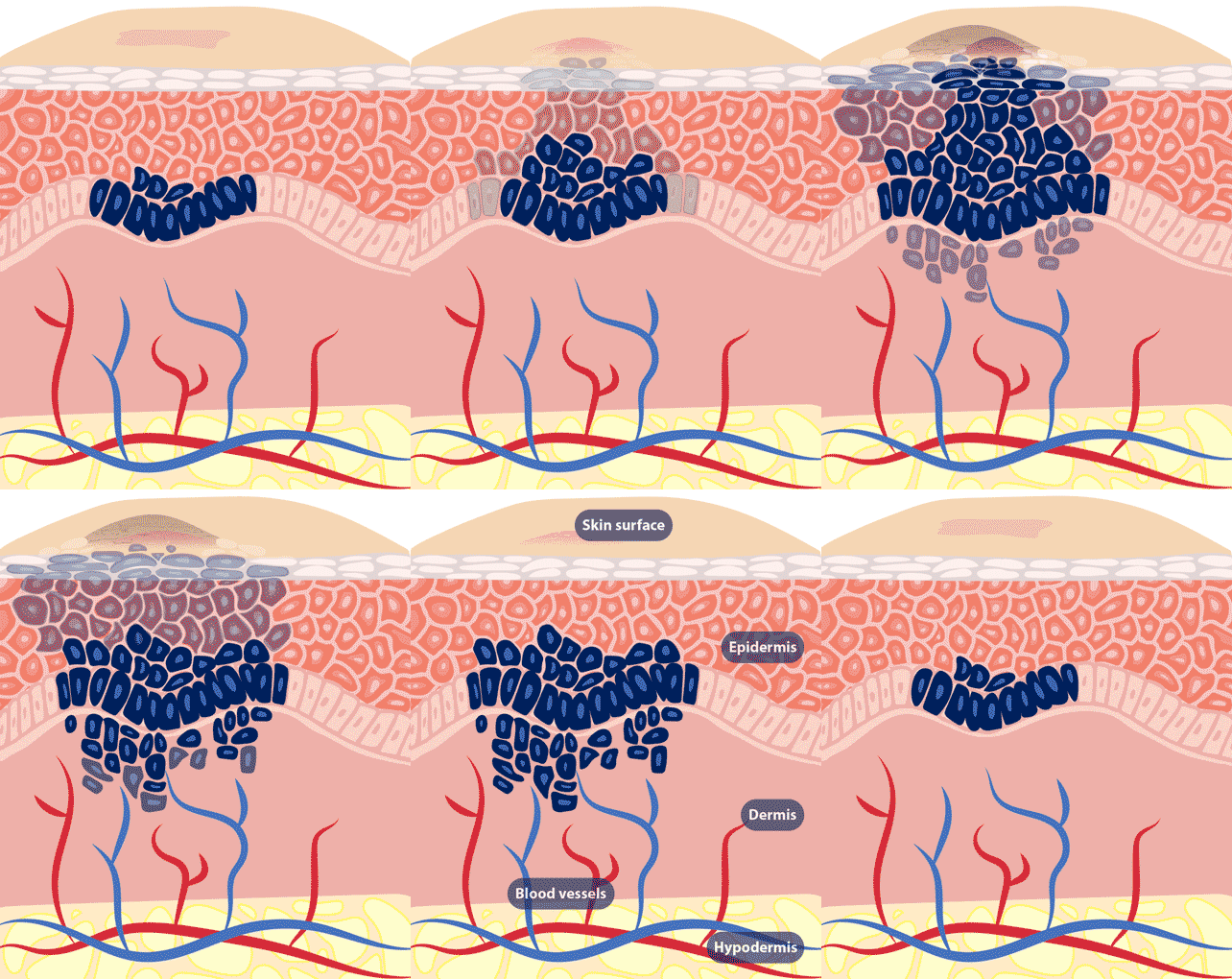
Illustration showing the layers of the skin and how AKs develop.
AK lesions can persist at an early stage, or even regress and spontaneously clear without treatment. However some of them can evolve into skin cancer in the form of invasive SCC. The biggest concern with SCC is that it can metastasise. Metastatic SCC accounts for about 20% of skin cancer deaths. 1,5
Why Treat AK?
As it is not possible to predict which AK lesion will develop into an invasive SCC, treatment should aim to:4,9
- Reduce the risk of developing an invasive SCC
- Eliminate as many visible and non-visible AK lesions as possible, thus reducing the extent of field cancerisation
- Reduce the rate of AK recurrence
What are the treatments for AK?
- Lesion-directed therapies which treat individual lesions only1-5
Freezing
Surgical
therapy
Topical
treatments
Light
therapy
Who is at risk of developing AK?

Are fair skinned. Fair-skinned people are more likely to be affected because they have less natural protection

Have spent a long time exposed to the sun

Are over 40 (up to 50% of Australians over 40 of caucasian origin will have AK, increasing to up to 80% in the over 60s age group)

Are male (Historically, males tend to spend more time working outdoors - which places them at a higher relative risk of exposure to harmful rays. A balding scalp will also increase sun exposure)

Are taking immunosuppressant therapy
Ways to protect your skin from developing AK

Limit your exposure to the sun when UV rays are strongest

Wear long sleeves, pants or skirts, a hat, and sunglasses

Apply sunscreen 20 minutes before going out, then every 2 hours, to all exposed areas, not forgetting your ears, hands, and neckline

Use sunscreen with a high sun protection factor that is waterproof
Take care of your skin and if in any doubt, please consult your doctor.
References
- Phan K, Shumack S. Med Today. 2021;5:3-9
- Marques E, Chen TM. Actinic Keratosis. StatPearls Publishing: Treasure Island (FL). Updated 2023
- Dermatology Expert Group. Therapeutic guidelines 2022;eTG August 2022 edition.
- Stockfleth E. et al J Eur Acad Dermatol Venereol. 2017;31 Suppl 2:8-11
- Chia A, et al. Aust Fam Physician. 2007;36:539-541
- Willenbrink TJ et al. J Am Acad Dermatol. 2020;83:709-717
- Stockfleth E, et al. Curr Ther Res Clin Exp. 2022;96:100661
- Cornejo CM, et al. J Am Acad Dermatol. 2020;83:719-730.
- Stockfleth E, et al. Dermatol Ther (Heidelb). 2022;12:467-479
- Dohil MA. J Drugs Dermatol. 2016;15:1218-1224.
- Sun safety | Cancer Council – Sun safety www.cancer.org.au/cancer-information/causes-and-prevention/sun-safety/be-sunsmart. Accessed November 2025.